

Choosing a printer is not just about finding a model with the features you need. The manufacturer behind the printer can also have a major impact on its quality, reliability, and overall ownership experience. Some printer brands are known for producing dependable machines that can handle frequent printing without much trouble. Others have built their reputation around sharp photo quality, efficient ink systems, or advanced printing technology. With so many manufacturers available, it can be difficult to tell which brands are actually worth considering. Brother, Canon, Epson, and HP are among the most recognized names in the industry, but each has its own approach to printer design and technology. Their product lines also differ in terms of ink and toner systems, printing performance, and available features. Understanding these differences can make it easier to narrow down your options before choosing a specific printer. It is also important to look beyond brand popularity and consider factors such as durability, print quality, operating costs, and customer support. A well-known name does not necessarily mean the same thing for every type of printer or every user. This guide takes a closer look at the leading printer manufacturers and what each brand is known for. By comparing their strengths and key differences, you can better understand which manufacturer may fit your printing needs.
What Sets a Printer Manufacturer Apart?
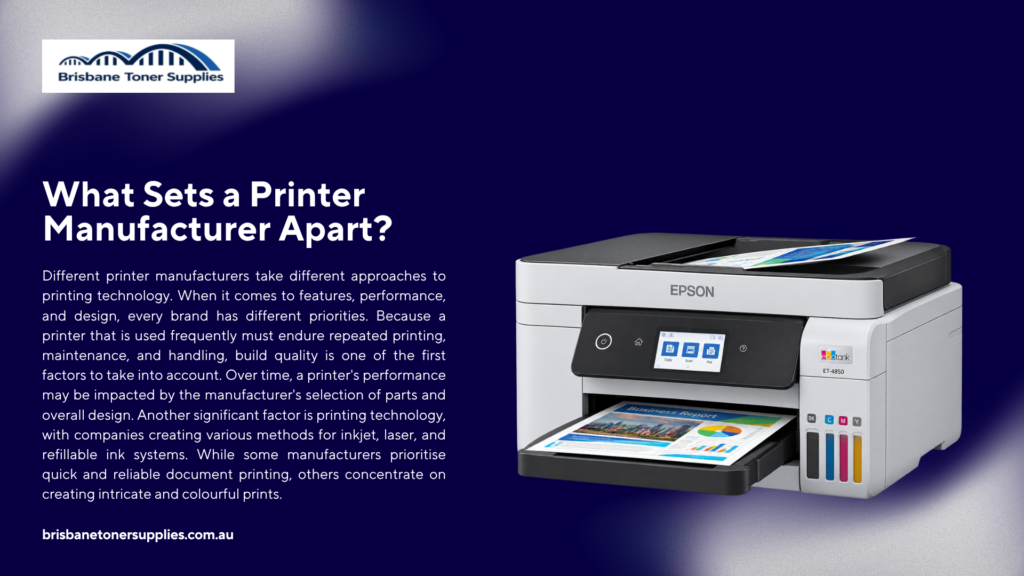
Different printer manufacturers take different approaches to printing technology. When it comes to features, performance, and design, every brand has different priorities. Because a printer that is used frequently must endure repeated printing, maintenance, and handling, build quality is one of the first factors to take into account. Over time, a printer’s performance may be impacted by the manufacturer’s selection of parts and overall design. Another significant factor is printing technology, with companies creating various methods for inkjet, laser, and refillable ink systems. While some manufacturers prioritise quick and reliable document printing, others concentrate on creating intricate and colourful prints. Additionally, the output quality is important, particularly for users who frequently print detailed documents, images, or graphics. The total cost of owning a printer can also be significantly impacted by ink and toner systems. A printer may be inexpensive to buy, but if its consumables are expensive or frequently need to be replaced, it will cost more to maintain. The ownership experience can also be influenced by customer service, warranty coverage, and replacement supply availability. Looking at what a manufacturer brings together provides a clearer picture. Understanding each brand’s unique strengths and priorities is more beneficial than selecting one solely on the basis of familiarity.
Leading Names in the Printer Industry
The printer industry includes several well-established manufacturers, each with a different approach to printing technology and product design. Brother is widely recognized for its printers designed around efficient document printing, with a strong presence in both inkjet and laser categories. Its lineup includes compact options as well as machines designed for heavier printing demands. Canon has a broad range of printers and is particularly well known for its focus on image and photo quality. Its experience in imaging technology has helped shape its printer lineup for users who care about detailed and vibrant output. Epson has built a strong identity around inkjet printing and refillable ink systems, including its EcoTank range. These systems are designed to reduce the need for frequent cartridge replacements and can be useful for users with regular printing needs. HP is another major name with a wide selection of printers covering everyday documents, photos, and more demanding printing tasks. Its product range also includes both inkjet and laser technologies, giving users several options depending on how they print. While these manufacturers compete in many of the same categories, their strengths and product strategies are not identical. Looking at each brand individually can help explain why certain manufacturers appeal to different types of users. Understanding what each company focuses on also makes it easier to compare brands based on features and priorities rather than name recognition alone.
Which Printer Brands Are Known for Reliability?
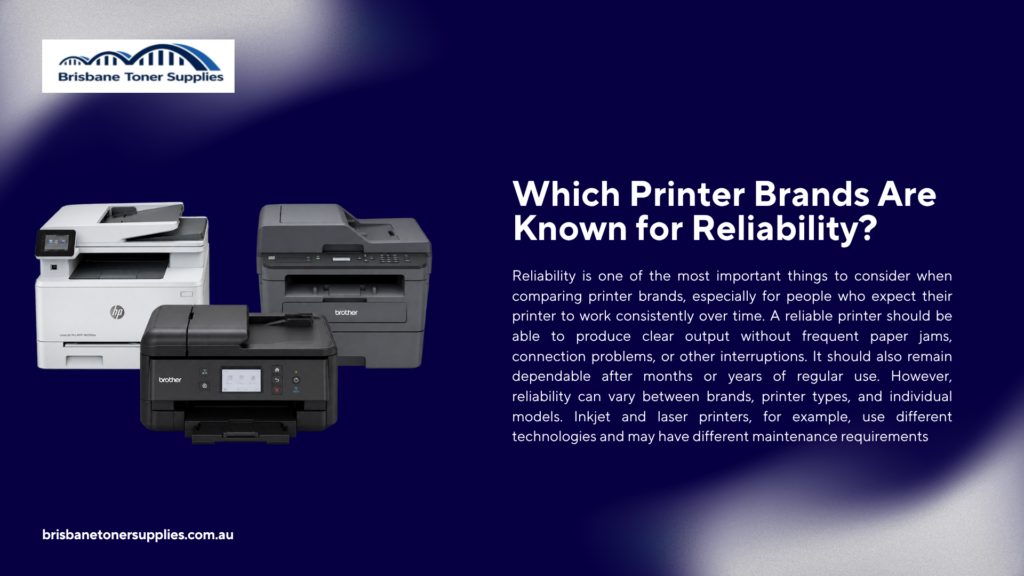
Reliability is one of the most important things to consider when comparing printer brands, especially for people who expect their printer to work consistently over time. A reliable printer should be able to produce clear output without frequent paper jams, connection problems, or other interruptions. It should also remain dependable after months or years of regular use. However, reliability can vary between brands, printer types, and individual models. Inkjet and laser printers, for example, use different technologies and may have different maintenance requirements. The way a printer is used can also affect its long-term performance, since occasional home printing places different demands on a machine than frequent document printing. Brother, Canon, Epson, and HP all have established reputations in the printer industry, but their reliability can differ depending on the specific product line. Customer reviews and independent reliability studies can provide useful information, although results should be considered in context rather than treated as a permanent ranking. Build quality, maintenance requirements, replacement supplies, and access to technical support can also influence the overall ownership experience. A brand with a strong reputation may still have individual models that perform differently from what users expect. For this reason, it is helpful to look at reliability alongside print quality, technology, and running costs. Comparing these factors gives a more realistic picture of what users can expect from different manufacturers. Rather than relying on popularity alone, examining how each brand performs over time can help identify the manufacturers that consistently meet different printing needs.
How the Major Printer Brands Compare
Comparing the major printer manufacturers can help make the differences between their product lines easier to understand. Brother, Canon, Epson, and HP all offer printers for different types of users, but their areas of focus are not exactly the same. Brother has a strong presence in document printing and is well known for its laser printer lineup. Canon offers a broad selection of printers and has a particularly strong connection to photo and imaging technology. Epson is closely associated with inkjet printing and refillable ink systems, making it a familiar name for users who print regularly. HP also has a wide range of inkjet and laser printers, covering everyday printing as well as more demanding workloads. When comparing Brother and Canon, the differences can often be seen in their approach to document and image focused printing. Canon and Epson have overlapping inkjet options, but they use different technologies and ink systems across their product ranges. Epson and HP also offer a variety of inkjet printers, although their approaches to consumables and product features can differ. Brother and HP compete across several categories as well, particularly in document-focused and multifunction printing. These comparisons show that there is no single feature that defines every printer manufacturer. Instead, each brand brings different technologies, product designs, and priorities to the market. Looking at those differences can help users understand which manufacturer aligns more closely with the type of printing they expect to do.
What Each Printer Brand Does Best
Each major printer manufacturer has developed particular strengths that help distinguish its products from the competition. Brother is widely associated with efficient document printing and has a strong selection of laser printers for users who handle text-heavy workloads. Its lineup also includes inkjet and multifunction printers for more general printing needs. Canon is known for its imaging technology and has developed a strong presence in photo and color printing. Its printers are often designed to deliver detailed images and vibrant colors, making the brand familiar to users who print photographs and graphics. Epson has made inkjet printing a major part of its identity, particularly through its refillable ink systems. Its EcoTank line is designed around high-capacity ink tanks that can reduce the need for frequent cartridge replacements. HP offers a broad mix of inkjet and laser printers, giving users options across everyday documents, photos, and higher-volume printing. The brand also places considerable emphasis on connected printing, with features that make it easier to print from computers, phones, and other devices. Beyond these specific strengths, all four manufacturers offer multifunction printers that combine printing with scanning and copying. Their product ranges also vary in size, features, and intended use, so one brand’s strengths may be more relevant to one user than another. Looking at what each manufacturer does best provides a useful starting point for comparing brands based on actual printing needs. Instead of treating every printer from a company as identical, it is more helpful to consider the technology and purpose behind each product line.
Key Differences Between Printer Manufacturers
Printer manufacturers may offer similar features, but the way they approach printing technology can be quite different. One of the clearest differences is the type of printing technology used across their product ranges. Some brands have a strong focus on inkjet printers, while others have a long-standing presence in laser printing. Ink systems also vary, with traditional cartridges, high-capacity tanks, and toner systems designed for different printing habits. These differences can affect how often supplies need to be replaced and how much ongoing maintenance is required. Print quality is another area where manufacturers take different approaches, particularly when it comes to text, graphics, and photographs. Some printer lines are designed with detailed color output in mind, while others prioritize sharp text and fast document printing. Product selection can also vary considerably between brands, with some offering more choices for compact home printers and others providing a wider range of business-oriented machines. Connectivity is another factor, as many modern printers support wireless printing, mobile devices, and cloud-based services. The design of companion software and mobile applications can also influence how convenient a printer is to set up and use. Customer support and the availability of replacement ink, toner, and parts can further distinguish one manufacturer from another. These differences are worth considering because a printer brand that suits one type of user may not offer the same advantages for another. Looking at technology, supplies, features, product range, and support together gives a clearer understanding of what separates the major printer manufacturers.
Final Thoughts
Choosing between printer manufacturers becomes easier when you look beyond brand recognition alone. Brother, Canon, Epson, and HP each bring different technologies, product ranges, and areas of expertise to the printer market. Some have a stronger presence in laser printing, while others are better known for inkjet technology and high-capacity ink systems. Print quality, reliability, running costs, and available features can also vary across different brands and product lines. These differences matter because the right choice depends on how often you print and what you usually print. A brand that works well for everyday documents may have a different advantage for photo printing or high-volume workloads. Also consider the availability and cost of ink, toner, replacement parts, and support in your area. These details can help you avoid choosing a printer based only on popularity or familiarity. Instead, you can compare manufacturers based on the qualities that matter most to you. No single manufacturer is designed to meet every printing need in the same way. Taking the time to understand what each brand offers can make the search for a suitable printer much more straightforward. In the end, comparing the manufacturers themselves gives you a better foundation for deciding which printer brand fits your expectations and everyday printing needs.