


When minor expenses mount up over time, printing can become surprisingly costly. Your total printing costs can quickly rise due to ink, toner, paper, and needless reprints. Spending more than necessary can result from even a few wasted pages or poorly selected print settings. The good news is that cutting back on printing isn’t always necessary to save money. You can make better use of your supplies by making small adjustments to the way you print. Paying attention to what you print and how you print it is the first step toward understanding how to lower printing costs. Reducing the amount of ink, toner, and paper used can also be achieved by selecting the appropriate settings. Before purchasing new supplies, it is also worthwhile to examine your printing habits. Little changes, like printing on both sides of the paper or using black and white, can have a significant impact. We’ll go over doable strategies to lower printing expenses, conserve ink and toner, and make better use of paper in this guide. You can lower your printing costs without adding needless complexity to your regular printing by making a few wiser decisions.
Why Do Printing Costs Add Up So Quickly?
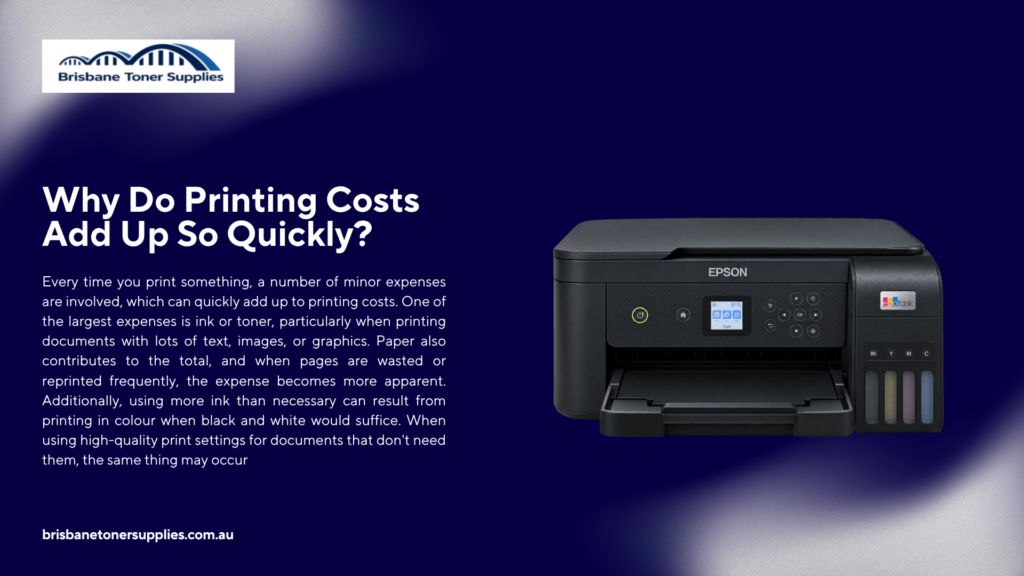
Every time you print something, a number of minor expenses are involved, which can quickly add up to printing costs. One of the largest expenses is ink or toner, particularly when printing documents with lots of text, images, or graphics. Paper also contributes to the total, and when pages are wasted or reprinted frequently, the expense becomes more apparent. Additionally, using more ink than necessary can result from printing in colour when black and white would suffice. When using high-quality print settings for documents that don’t need them, the same thing may occur. Unnecessary reprints can result from errors like printing the incorrect page, leaving blank pages, or neglecting to check the layout. Even though these problems might not seem like much, they can get costly if they occur frequently. The speed at which supplies are used is also influenced by your printing habits. For instance, printing all of a document’s pages rather than just the sections that are necessary can result in the use of more paper, ink, and toner. Selecting the incorrect kind of paper can also increase expenses when a less expensive alternative would be equally effective. Finding workable solutions to lower printing costs is made easier by knowing where these costs originate. You can use supplies more effectively and cut down on wasteful spending by making even small changes to your printing habits.
How to Reduce Printing Costs
It’s not always necessary to make significant adjustments to your printer or printing schedule in order to lower printing costs. Printing just the pages and information you truly require is one of the simplest ways to cut costs. To prevent superfluous pages or formatting errors, carefully review the document before printing and use print preview. When colour is not important for the document, going with black and white instead of colour can also be helpful. For straightforward documents that don’t require the best print quality, you can also use draft or economy mode. Another easy way to use fewer sheets is to print on both sides of the paper. Changing your printer’s settings according to the kind of document you are printing is also beneficial. For instance, a photo or intricate graphic may require different quality settings than a simple text document. Paper, ink, and toner can all be saved by avoiding needless reprints. Even though these minor adjustments might not seem like much at first, they can cut down on waste every time you print. By adopting more intelligent printing practices, you can eventually reduce your overall printing costs without sacrificing the quality of documents that truly need to look their best.
How to Reduce Ink and Toner Costs
Particularly if you print a lot, ink and toner can account for a significant portion of your printing costs. When colour printing is not required, using black and white printing is an easy way to lower ink costs. For simple documents that don’t require crisp, high-quality output, you can also select draft or economy mode. Excessive ink consumption can be avoided by avoiding superfluous images, dark backgrounds, and large coloured areas. Using the right print settings for laser printers can also help you get more pages out of each toner cartridge. Instead of just comparing the cost of individual cartridges when purchasing supplies, consider the cost per page. A cartridge that costs more up front might end up costing less over time while producing more pages. Because high-yield cartridges are made to produce more pages before they need to be replaced, they may also be worthwhile if you print frequently. Selecting ink or toner that works with your printer is also crucial to prevent issues that might result in wasted materials. You can further minimise the need to print the same page again due to minor errors by proofreading your documents before printing. You can cut ink and toner costs without sacrificing print quality by being mindful of your printing settings, supply selections, and daily routines.
How to Reduce Paper Costs
Another printing expense that can get expensive when sheets are used carelessly is paper. When the document permits it, printing on both sides is one of the simplest ways to save money on paper. When smaller text is still readable, you can also print several pages on a single sheet. Examine the document for extra sections, blank pages, or large spaces that can be eliminated before printing. Costs for regular printing can also be reduced by using regular paper rather than speciality paper. It might not be necessary to use thicker or better paper if you only need a document for reference. When only one page needs to be corrected, it is also helpful to avoid reprinting the entire document. Many of these errors can be avoided by first reviewing the layout and print preview. Depending on the available prices, purchasing paper in larger packs may also lower the cost per sheet. The least expensive option isn’t always the best one, though, if the paper produces subpar results or printing issues. You can get more value out of every pack you purchase while reducing waste by using paper more carefully. You can reduce the cost of paper without complicating your daily printing routine with a few easy adjustments.
How to Save Money on Printing
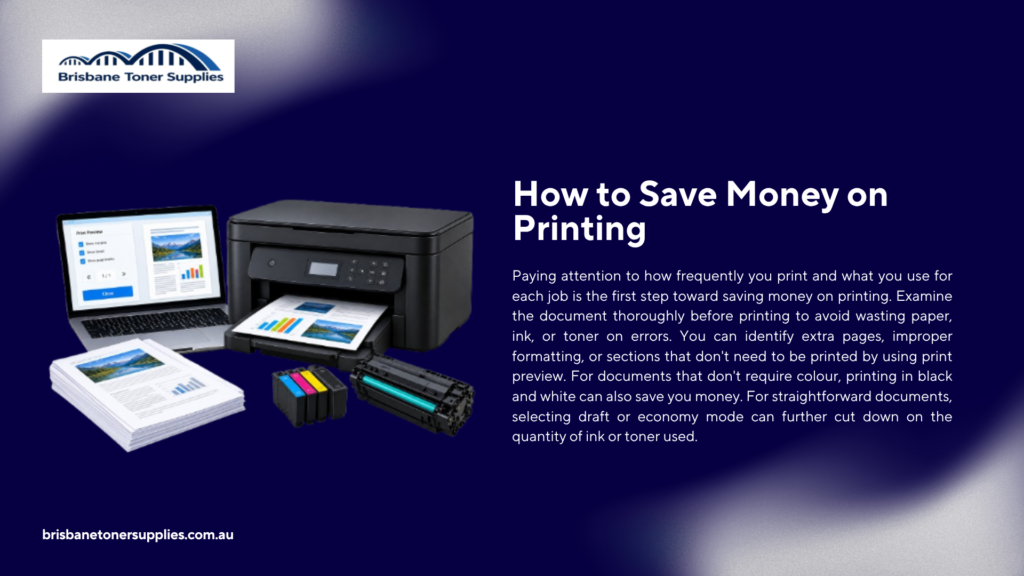
Paying attention to how frequently you print and what you use for each job is the first step toward saving money on printing. Examine the document thoroughly before printing to avoid wasting paper, ink, or toner on errors. You can identify extra pages, improper formatting, or sections that don’t need to be printed by using print preview. For documents that don’t require colour, printing in black and white can also save you money. For straightforward documents, selecting draft or economy mode can further cut down on the quantity of ink or toner used. To make the most of each sheet, print on both sides of the paper whenever you can. When purchasing ink, toner, and paper, it is also beneficial to compare the cost per page rather than selecting supplies solely on the basis of price. Another simple strategy to control your printing costs is to avoid needless reprints. If you print frequently, you can identify areas where you are overspending by monitoring how quickly your supplies are used. You can avoid overspending by purchasing supplies that correspond with your actual printing requirements. You can reduce your printing costs while still obtaining the desired results by adopting consistent habits and making wiser decisions.
How to Reduce Printing Expenses With Better Printer Settings
One simple way to lower printing costs without replacing the printer itself is to modify its settings. To begin, select a print quality appropriate for the kind of document you are printing. Using draft or standard mode can help save ink and toner because basic text documents typically don’t require the highest quality setting. Another way to avoid needless colour printing is to make black and white the default. When you want to use less paper, use duplex printing if your printer supports it. In order to prevent wasting sheets due to improper settings, you can also check the paper size and layout before printing. Another helpful step is selecting the appropriate resolution, particularly when printing graphics or images. For detailed prints, higher resolution can be helpful, but it’s not always required for regular documents. Before printing a big batch, it’s also a good idea to check the printer’s settings because one wrong choice can lead to wasted materials. You can prevent using more ink, toner, or paper by using the appropriate settings for each kind of print job. These minor changes can eventually improve the efficiency of your printing process and help control your overall printing expenses.
What Are the Methods of Cost Reduction?
Without completely altering how you use your printer, there are a number of easy ways to lower printing expenses. Using only the quantity of paper, ink, and toner that you truly require is one of the best ways to cut down on material waste. Errors that result in needless reprints can be avoided by reviewing documents before printing. Reducing supply usage can also be achieved by modifying print settings, such as using draft mode or black and white. Another useful method to extend each sheet is to print on both sides of the paper. Over time, you can prevent overspending by selecting printing supplies based on their cost per page. Instead of always selecting the highest setting, it is helpful to match the print quality to the document’s intended use. You can find habits that are costing you money by keeping track of how frequently you print. Because even tiny amounts of unused paper, ink, or toner can add up over time, waste reduction is particularly crucial. Controlling these expenses can be made simpler by streamlining your entire printing process without sacrificing the calibre of crucial documents. You can lower printing costs and maximise the value of the materials you use by combining improved printing practices with thoughtful supply selections.
How to Save on Printing Costs Without Sacrificing Quality
You don’t have to accept subpar output in order to save money on printing. Using the appropriate settings and materials for each kind of print job is crucial. Standard or draft quality might be sufficient for straightforward text documents, but higher quality settings might be required for images and intricate graphics. Reducing ink consumption without compromising important documents can also be achieved by printing in colour only when necessary. Examine the document thoroughly before printing to prevent wasting materials on errors or superfluous pages. You can identify formatting problems before they result in expensive reprints by using print preview. Since premium paper isn’t always required for daily documents, selecting the appropriate paper can also have an impact. When the document doesn’t need to be printed on separate sheets, duplex printing is another option. Instead of concentrating only on the cost of the cartridge when purchasing ink or toner, take page yield and cost per page into account. By making these minor changes, you can manage printing costs without sacrificing the quality that is important for every job. You can cut expenses without sacrificing the look or functionality of your printed documents by adopting better printing practices.
Final Thoughts
It is not necessary to make costly upgrades or complex adjustments in order to lower printing costs. Paper, ink, and toner waste can be avoided by adopting simple habits like proofreading documents before printing. The quantity of supplies used for each task can also be decreased by using black and white, draft mode, or the appropriate print quality. Another simple method to maximise each sheet is to print on both sides of the paper. Selecting ink, toner, and paper according to your actual printing volume is also beneficial. You can get a better idea of how much you are actually spending on printing supplies by comparing the cost per page. Because even tiny amounts of waste can add up over time, avoiding needless reprints is equally important. Additionally, you don’t have to compromise on print quality because you can save money and still create documents that are readable and helpful with the correct settings. Developing printing habits that cut waste without making the process difficult is crucial. Managing printing costs can be considerably simpler once these routines are ingrained in your daily life. You can reduce your printing expenses over time by paying a little attention to your settings, materials, and printing practices.