
Choosing between printer ink and toner can be confusing, especially when buying a new printer or replacing an empty cartridge. Both are used to print documents, photos, and other materials, but they work in different ways. Inkjet printers use liquid ink, while laser printers use toner powder. This difference affects print quality, speed, maintenance, and overall printing costs. For example, a printer with a low purchase price may require frequent cartridge replacements. Another printer may cost more upfront but have lower printing costs over time. Your choice also depends on how often you print and what you usually print. Students may need a printer for assignments, while businesses may need one for daily paperwork. People who print photos may also have different needs from those who mainly print black-and-white documents. Understanding the printer ink vs. toner difference can help you choose a printer that suits your budget and everyday needs.
Understanding How Printer Ink and Toner Work
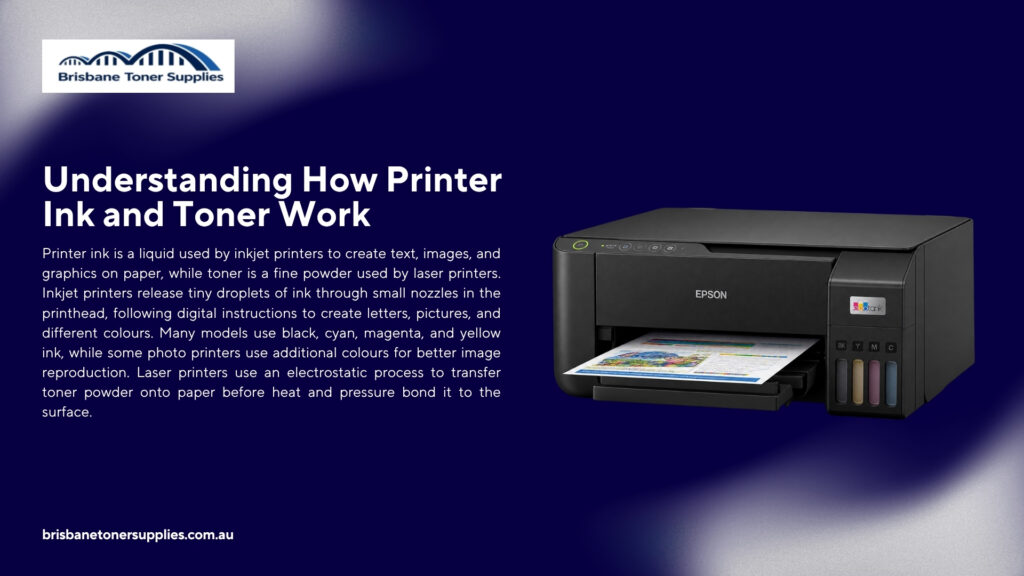
Printer ink is a liquid used by inkjet printers to create text, images, and graphics on paper, while toner is a fine powder used by laser printers. Inkjet printers release tiny droplets of ink through small nozzles in the printhead, following digital instructions to create letters, pictures, and different colours. Many models use black, cyan, magenta, and yellow ink, while some photo printers use additional colours for better image reproduction. Laser printers use an electrostatic process to transfer toner powder onto paper before heat and pressure bond it to the surface. This process helps produce sharp text and clear lines, making laser printers useful for reports, invoices, and other documents. Inkjet printers are often suitable for photos, colourful presentations, invitations, and creative projects. However, some inkjet printers may need printhead cleaning, especially after long periods without use. Toner does not dry out like liquid ink, although laser printers may still require maintenance or replacement parts such as a drum unit. Both technologies can produce good-quality prints, but the results depend on the printer model, paper, and settings. Understanding how each technology works can help you choose the right printer for your needs.
Comparing Print Quality, Speed, and Uses
Inkjet printers are often suitable for photographs, colourful school projects, invitations, and other materials that need detailed images and smooth colour transitions. They are popular among students, families, photographers, and small businesses that need to print colourful materials. Laser printers, on the other hand, are commonly used for reports, contracts, invoices, forms, and other text-heavy documents. Many laser printers offer fast printing speeds and can handle large batches of paperwork efficiently. However, printing speed varies by model, so checking the manufacturer’s specifications is important. Inkjet printers can also produce sharp text, while colour laser printers can handle presentations, charts, and graphics. Photo quality depends on the printer’s design, ink or toner, and paper used. Inkjet printers may be compact and suitable for home use, while some laser printers are designed for busy offices. Both types have different models and features, so neither is automatically better for every task. Before buying, consider what you print most often, how quickly you need your pages, and whether photo quality or document printing matters more to you.
Comparing Ink and Toner Costs Per Page
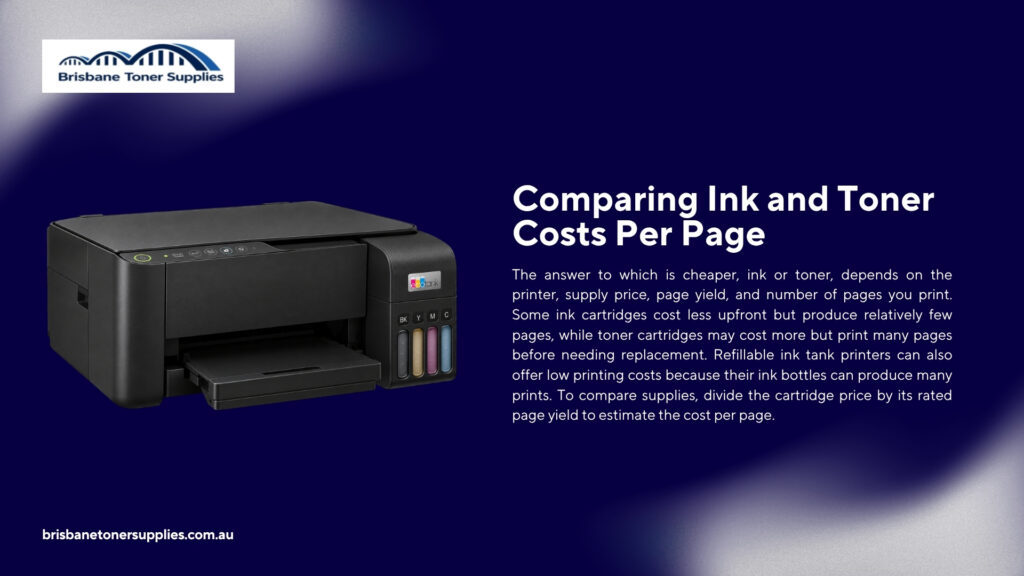
The answer to which is cheaper, ink or toner, depends on the printer, supply price, page yield, and number of pages you print. Some ink cartridges cost less upfront but produce relatively few pages, while toner cartridges may cost more but print many pages before needing replacement. Refillable ink tank printers can also offer low printing costs because their ink bottles can produce many prints. To compare supplies, divide the cartridge price by its rated page yield to estimate the cost per page. For example, an ink cartridge priced at $30 with a rated yield of 600 pages costs an estimated $0.05 per page, while a toner cartridge priced at $120 with a rated yield of 2,400 pages also costs an estimated $0.05 per page. These figures are examples only and do not represent current Australian retail prices. Actual costs may vary depending on how much ink or toner each page uses. Colour printing may cost more because several cartridges or toner colours may be needed. You should also consider additional maintenance parts, paper, and electricity when estimating your overall expenses. If you print frequently, compare high-yield toner cartridges with refillable ink tank printers, while occasional users may prefer a printer with a lower initial price. Checking both the purchase price and the cost per page can help you choose a printer that fits your budget.
Choosing Between an Inkjet and Laser Printer
Toner isn’t always better than ink; the right option depends on what you print and how often you use your printer. An inkjet printer may be a good choice if you regularly print photographs, colourful school projects, invitations, and creative materials. It can produce detailed images, especially when used with compatible photo paper. However, standard ink cartridge costs can add up with high-volume printing, so refillable ink tank models may be worth considering. A laser printer may suit you better if you frequently print reports, contracts, invoices, and other text-heavy documents. Many laser printers offer fast printing speeds and toner cartridges with high page yields, although prices and performance vary by model. Black-and-white laser printers can be practical if you rarely need colour, while colour laser printers can handle business graphics and presentations. You should also consider printer size, connectivity, maintenance, and replacement supply prices before making a decision. If you print only occasionally, an affordable inkjet printer may meet your needs, while frequent document printing may make a laser printer worth considering. Compare the printer’s upfront price and estimated running costs instead of choosing based on ink or toner alone.
Finding the Best Printer for Your Needs
Finding the right printer starts with understanding how you plan to use it and how much you are willing to spend. If you mainly print school assignments, forms, and everyday documents, an affordable inkjet printer may be enough for your needs. For households that frequently print photos, invitations, or colourful projects, an inkjet model with good colour reproduction may be a better fit. Businesses that handle large amounts of paperwork may benefit from a laser printer because of its speed and ability to manage regular printing tasks. Before purchasing, check the price of replacement cartridges and compare their estimated page yields to understand the ongoing costs. It is also worth checking whether high-yield cartridges or refillable ink tanks are available for the model you are considering. Features such as wireless printing, automatic double-sided printing, and scanning can make everyday tasks more convenient. You should also consider the printer’s size, especially if you have limited desk space at home or in the office. Checking the availability of replacement supplies can help you avoid difficulties when your ink or toner runs out. By comparing these details before buying, you can choose a printer that suits your printing habits and offers good value over time.
Final Thoughts
Understanding the differences between printer ink and toner can help you make a more informed decision when buying a printer. Inkjet printers use liquid ink and are often suitable for photos, colourful materials, and general home printing. Laser printers use toner powder and are commonly chosen for fast, frequent document printing. However, the better option depends on your printing habits rather than the technology alone. If you print only a few pages each week, your needs may differ from those of a business that prints hundreds of pages daily. Comparing cartridge prices and page yields can help you estimate your running costs before making a purchase. It is also important to consider the printer’s initial price, maintenance needs, and the availability of replacement supplies. For frequent printing, a refillable ink tank printer or a laser printer with high-yield toner may offer better value, depending on your requirements. Australian buyers should compare local printer and cartridge prices to find an option that fits their budget. Ultimately, choosing the right printer means balancing print quality, convenience, and long-term costs to get the best value for your money.